Designing with Spirit: Unlocking Patriotic Digital Paper
There is a specific energy that comes with the Fourth of July. It is not just about the fireworks; it is about the heat of the summer, the smell of charcoal, and the distinct visual language of red, white, and blue. For designers, entrepreneurs, and content creators, capturing that spirit without resorting to clichés or low-quality graphics is a constant challenge. We often find ourselves scrolling through endless stock libraries, looking for something that feels authentic yet professional. This is where high-quality digital assets become the backbone of our creative workflow.
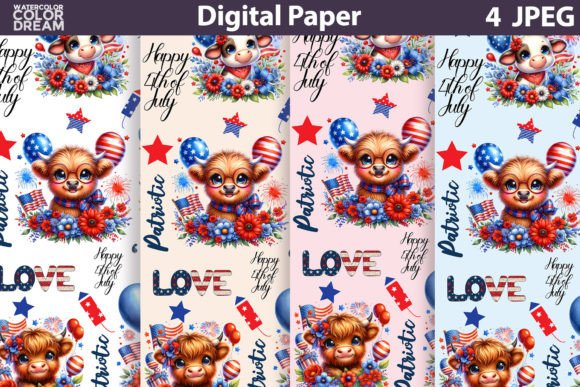
The set of Patriotic Digital Paper I am discussing today is more than just a collection of background colors. It is a curated set of four JPEG files, specifically engineered for high-resolution output. At 300 dpi and 3600x3600 pixels (or 12x12 inches), these files are designed to meet the rigorous demands of modern print and digital production. Whether you are designing a hero image for a website, creating social media graphics, or laying out a physical invitation, the foundation of your design matters. A pixelated or poorly composed background can instantly cheapen a brand's perception. Conversely, a textured, thoughtful backdrop provides depth and context, allowing your typography and focal points to shine.
The Anatomy of AI-Assisted Design
In the current landscape of modern typography and design, we are seeing a fascinating convergence of human experience and artificial intelligence. I want to be transparent about the creation process of these assets because it speaks to their quality. These designs are created using AI, but they are not "prompt and publish." They are the result of a dialogue between the algorithm and my own experience as a designer.
When I generate these textures, I am looking for specific color harmonies and textural details that evoke a sense of nostalgia without looking dated. The AI provides the raw material—complex patterns, unexpected color bleeds, and intricate details—but the human touch is essential for the refinement. I meticulously process each illustration. This involves removing unwanted artifacts that AI often produces, such as distorted text or floating objects, and perfecting the color correction. The goal is to ensure that the red is a true "Old Glory" red, and the blue has the right depth, not just a generic primary color.
This process results in a premium font of background asset. Think of these papers not just as images, but as design components that have been stress-tested. They are built to be versatile. You might use one as a subtle texture behind a serif font for a vintage feel, or perhaps overlay a modern sans serif font on a bold striped pattern for a clean, contemporary look. The versatility is intentional.
Practical Applications for Professionals
For the business owner or creative professional, the value of a digital asset lies in its adaptability. These patriotic digital paper files are high-resolution enough for commercial printing, meaning you can use them for packaging design, flyers, or posters without fear of quality loss. If you are a crafter working with sublimation printing on mugs, t-shirts, or coasters, the 12x12 inch format is the industry standard, making integration into your workflow seamless.
However, the utility extends far beyond the physical. In web design and social media graphics, texture is a powerful tool for visual hierarchy. A solid block of color is fine, but a textured background guides the eye. It creates a tactile experience on a flat screen. Imagine you are a small business owner announcing a 4th of July sale. Instead of a flat white box with red text, you use one of these papers as a banner background. Instantly, the post feels more festive and engaging. It stops the scroll because it feels "richer" than the standard content surrounding it.
Consider editorial design as well. If you are a blogger writing about summer recipes or party planning, these backgrounds can serve as page dividers, pull-quote backgrounds, or hero images. They help build a cohesive brand identity for the season. By using consistent, high-quality textures across your Pinterest pins, your Instagram stories, and your blog headers, you create a visual shorthand that your audience learns to recognize.
Integrating Textures with Typography
One of the most common mistakes I see in logo design and marketing materials is the clash between the background and the text. A busy background can render a delicate script font or handwritten font illegible. When working with these patriotic papers, you need to think about contrast and legibility.
If you are using a pattern-heavy background—say, a dense arrangement of stars or fireworks—you need to pair it with a bold, heavy typeface. A thick sans serif font works best here because the solid letterforms won't get lost in the texture. Alternatively, you can use a technique called "knockout" or "reverse," where the text is white, but placed inside a semi-transparent shape (like a circle or a banner) that sits on top of the paper.
If the background is more subtle—perhaps a soft watercolor wash or a muted vintage flag—you have more freedom. Here, a classic serif font can add elegance, while a flowing script font can add a personal, handwritten touch suitable for invitations or greeting cards. The key is testing. Always zoom out to see how the font pairing reads at a thumbnail size, especially for social media graphics where mobile viewing is dominant.
Evaluating Fit and Licensing
Before you download and apply these design assets to your next project, take a moment to evaluate the fit. Does the color palette of the paper match your existing brand colors? If your brand uses a navy blue, but the paper uses a bright royal blue, you may need to adjust your brand colors slightly for the campaign, or look for a paper that leans more toward the darker end of the spectrum.
Regarding usage, these files are provided as JPEGs, which makes them universally compatible with almost every design software, from Adobe Photoshop and Illustrator to Canva and Procreate. However, because they are raster images, they are not infinitely scalable like vector files. While 3600x3600 pixels is generous, if you plan to blow this up for a trade show booth or a vehicle wrap, you should test the resolution first. For standard packaging design, flyers, and digital use, they will perform perfectly.
Finally, consider the licensing. If you are using these for personal projects—like a scrapbook for a family reunion—the rules are straightforward. If you are a small business owner using them on products for sale, such as a planner cover or a t-shirt, ensure you understand the commercial terms. A high-quality asset is an investment in your product's professionalism. It shows your customers that you care about the details, from the typeface you choose to the texture behind it.
Ultimately, these patriotic digital paper files are about versatility and quality. They are tools to help you tell a story—whether that story is about national pride, a summer sale, or a celebration with loved ones. By combining AI efficiency with human artistry, they offer a reliable foundation for your most creative ideas. Thank you for visiting the shop, and I hope these designs bring as much joy to your projects as they brought to my studio.