Polish Folk Art Heart Valentine Elements for Modern Design
In a digital world saturated with generic graphics, there's a distinct power in motifs that carry centuries of cultural narrative. Polish Folk Art Heart Valentine Elements isn't just a collection of clipart; it's a curated vocabulary of symbolism, warmth, and intricate artistry. This set, blending traditional hand-painted watercolor textures with crisp digital illustration, offers a bridge between heritage craftsmanship and contemporary design needs. It’s for the creator who understands that a design's soul often lies in its details.
The Anatomy of a Folk Art Valentine
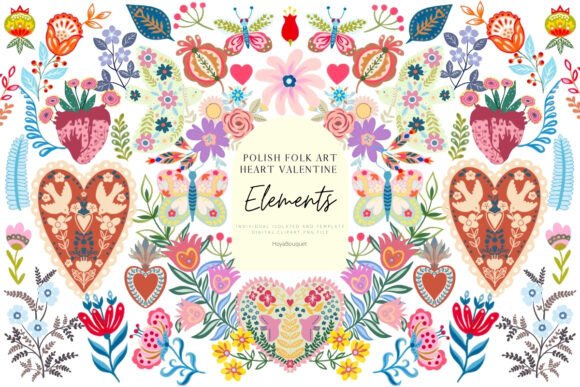
What defines this collection is its authentic personality. You’re not dealing with flat, vector-only shapes. The 46 individual, isolated PNG elements—each at 300 DPI high resolution—feature the subtle bleed and texture of real watercolor, layered with the precision of digital line work. Think of hearts adorned with intricate floral patterns, stylized animals like roosters or horses that symbolize luck and strength, and geometric borders that frame compositions with tribal-inspired symmetry. The color palette leans into vibrant, joyful hues—deep reds, cerulean blues, sunny yellows, and lush greens—though the digital format allows for effortless backdrop and color adjustments to fit any brand’s aesthetic.
The visual hierarchy is clear and intentional. The core motifs—the heart, the flower, the symbolic animal—are the focal points. They are supported by the 12 pre-designed symmetry folk layout templates, which act as structured borders, banners, and frames. This combination provides both standalone assets and ready-made compositions, making it a versatile design asset for projects requiring speed without sacrificing artistry. It’s a premium font equivalent in the illustration world: specialized, high-quality, and built for impactful brand identity work.
Where Tradition Meets Application: Real-World Use Cases
The true value of these elements is realized in their application. For the entrepreneur crafting a logo design for a boutique bakery or a handmade goods shop, a single, beautifully detailed folk heart can become the cornerstone of the brand mark, especially when paired with a clean sans serif font or a subtle script font for contrast. In editorial design and publishing, these motifs excel in chapter headers, pull quotes, or decorative borders for magazines and books focused on culture, weddings, or artisan crafts, adding a layer of curated authenticity.
For packaging design and product development, the applications are nearly limitless. Imagine these patterns on fabric fashion prints for pillows, bedding, or apparel. Envision them wrapping a product box, decorating a gift tag, or enhancing stationary like greeting cards and notebooks. The collection’s strength lies in its modularity; you can use a single floral element as a subtle watermark or build an elaborate, seamless pattern from the provided layouts. This adaptability is crucial for maintaining a cohesive visual language across diverse touchpoints, from a website’s web design graphics to its social media graphics and physical product lines.
Integrating Folk Elements with Modern Typography
Pairing these ornate illustrations with the right typeface is key to achieving balance and readability. The inherent detail of Polish folk art demands typographic restraint. A strong, geometric sans serif font can provide a clean, modern counterpoint, letting the illustrations breathe and ensuring the text remains legible. Alternatively, a sturdy serif font with moderate contrast can complement the traditional feel without competing for attention. Avoid overly decorative or complex display fonts for body text, as they can clash with the illustrations' own intricate patterns.
Consider the context. For a wedding invitation suite, you might pair a delicate script font for names with a simple sans serif for details, using a folk heart border to frame the text. For a brand’s commercial font system, the folk elements might serve as accent graphics, while the primary typeface remains highly legible for all communications. This strategic pairing influences not just aesthetics but also visual hierarchy, brand perception, and audience engagement. It tells a story of tradition meeting contemporary clarity.
A Practical Guide to Working with This Collection
Before diving in, take a moment to evaluate your project’s core needs. Is the goal to evoke warmth, tradition, and handmade quality? If yes, this collection is a strong fit. Test the elements by placing them alongside your chosen color palette and font pairing options. Do the watercolor textures harmonize or overwhelm? The ability to change backdrop colors is a significant advantage here—use it to integrate the motifs seamlessly into your existing scheme.
Examine the included styles: the individual isolated elements offer maximum creative freedom, while the 12 symmetry folk layouts provide instant structure for borders, banners, and frames. Use the layouts for time-sensitive projects like social media posts or quick editorial layouts. For more involved work like product design or fabric patterns, combine individual elements to create unique compositions. Always ensure the final resolution (300 DPI) meets your print specifications for crisp output on paper, fabric, or merchandise.
Finally, respect the craft. These aren’t generic vectors; they are digital interpretations of a rich artistic tradition. Use them thoughtfully to add genuine value and cultural depth to your work, whether for personal projects or commercial ventures. The result is design that feels both timeless and distinctly human.