30 Match the Colours: A Practical Guide to This Educational Asset
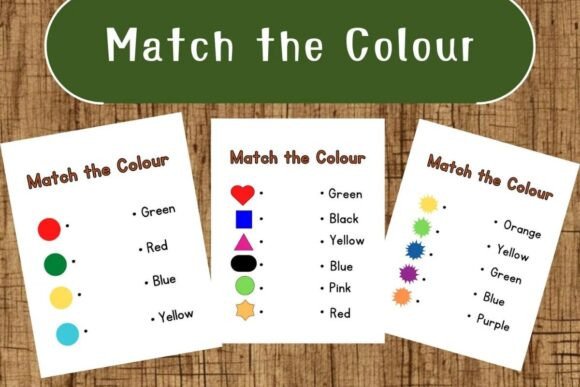
As a designer, you often look for assets that solve a specific problem with elegance and efficiency. While typography usually commands the spotlight, the underlying structure of design assets—specifically in the education and parenting sectors—requires a different kind of precision. 30 Match the Colours is a prime example of a specialized digital product that prioritizes functionality and engagement over abstract aesthetic theory. It is a high-resolution, printable PDF bundle designed to facilitate early childhood learning through color recognition and matching exercises.
Analyzing the Visual Style and Usability
Unlike a complex serif font or a fluid script font, the "design" here is the layout itself. The 30 Match the Colours package consists of 30 distinct pages formatted at exactly 8.5 x 11 inches. The visual style is intentionally clean and high-contrast, a necessity for toddlers and preschoolers who are still developing fine motor skills and visual tracking abilities. The personality of this asset is playful yet structured; it uses a "color alphabet" theme to bridge the gap between letter recognition and color theory.
For the creative professional or small business owner in the educational niche, the appeal lies in the resolution. At 4830x6250 pixels, the files are print-ready without any pixelation issues, which is a common pain point with lower-quality free resources. This high-resolution capability ensures that whether you are a homeschooling parent printing on an inkjet or a daycare center using a commercial laser printer, the output remains crisp and professional.
Strategic Applications for Designers and Marketers
If you operate within the brand identity space of educational products, understanding how to utilize assets like 30 Match the Colours is vital. This isn't just a worksheet; it is a content building block. Here is how different professionals can leverage this resource:
- Content Creators and Bloggers: Use these sheets as a value-add for your audience. If you run a parenting blog, offering a "free sample" page from the set can significantly boost email sign-ups. It serves as a tangible design asset that solves a problem for your readers.
- Small Business Owners (Daycare/Preschool): Incorporate these into your curriculum. The consistency of the 30-page set allows you to build a semester-long color module. It adds professionalism to your center's resource library, showing parents that you invest in structured learning materials.
- Etsy Sellers and Crafters: If you sell digital downloads, analyzing the structure of 30 Match the Colours can inform your own product creation. Note the layout dimensions and the "fun color alphabet" approach—these are selling points that drive conversion in the packaging design of digital goods.
In terms of visual hierarchy, the worksheets are designed to guide the child’s eye naturally. This is a lesson in layout that applies to web design and editorial design as well. When the user interface (or worksheet) is intuitive, engagement rates increase. The matching mechanic reinforces cognitive connections, making the learning experience sticky and effective.
Integrating the Asset into a Modern Workflow
When evaluating 30 Match the Colours for a project, the primary consideration is audience fit. This is a creative font and layout solution specifically for the pre-literate demographic. However, the workflow implications for the adult user—the designer, the teacher, or the parent—are significant.
First, consider the readability and accessibility. The design relies on clear iconography and color blocking. As a premium font or asset user, you must always test how colors render on different screens. The product notes wisely that colors may appear differently across devices; this is a standard caveat in digital download markets and emphasizes the need for proofing before a full print run.
Second, think about font pairing and customization. While the PDF format locks the design, you can use these pages as underlays or inspiration for your own modern typography projects. For instance, if you were designing a children's book, the color logic used in 30 Match the Colours could dictate your palette choices, ensuring your sans serif font or handwritten font choices complement the educational tone.
Finally, the commercial utility cannot be ignored. For marketers and entrepreneurs, this set represents a "done-for-you" solution. Instead of spending hours in Illustrator drawing matching icons, you have 30 ready-to-go pages. This efficiency allows you to focus on distribution and marketing strategy rather than production. Whether you are creating a social media graphics campaign to promote a learning center or assembling a physical workbook for sale, the asset provides the heavy lifting on the content side.
In conclusion, 30 Match the Colours is more than just a set of printable worksheets. It is a versatile design asset that bridges the gap between educational theory and practical application. By leveraging its high-resolution format and structured layout, professionals can enhance their offerings, streamline their production workflows, and deliver high-quality learning experiences to their youngest audiences.