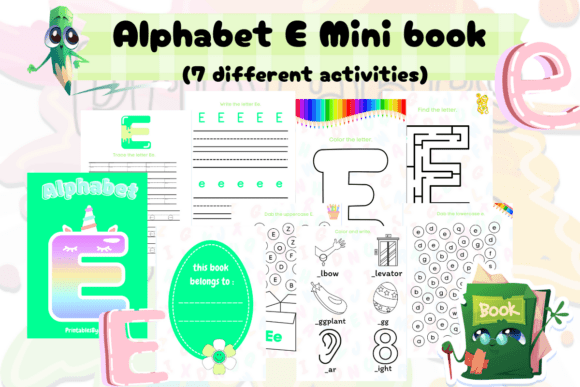
Alphabet E Mini Book: Practical Activities for Early Learners
When working on early literacy projects—whether you are a preschool teacher designing a curriculum, a homeschool parent planning a unit, or a content creator developing educational printables—efficiency and engagement are paramount. The Alphabet E Mini Book serves as a foundational design asset in this niche. It is not merely a set of worksheets; it is a structured approach to introducing the letter E through tactile and visual repetition. For professionals in the educational publishing space, this resource represents a "plug-and-play" solution that saves significant production time while maintaining high educational standards.
Visual Characteristics and Educational Style
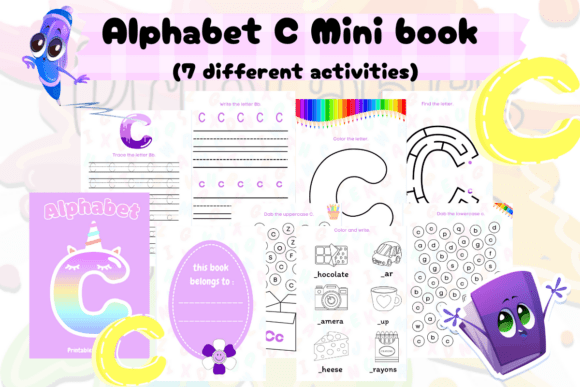
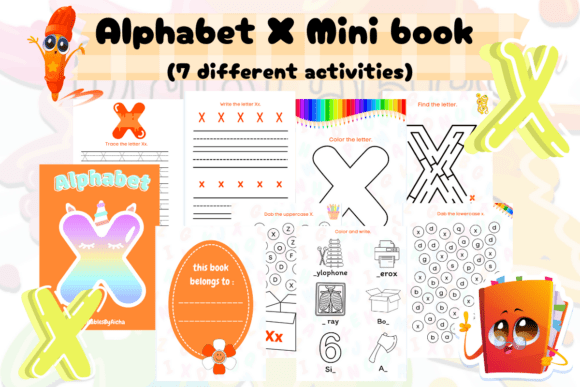
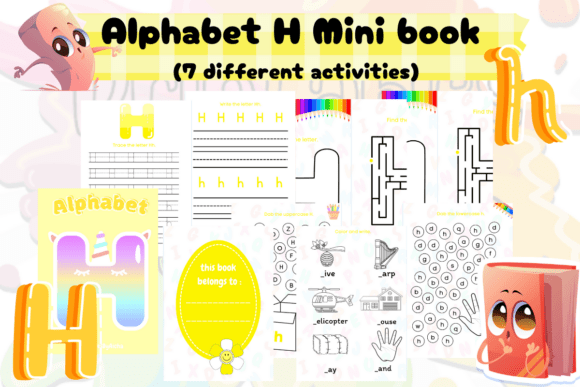
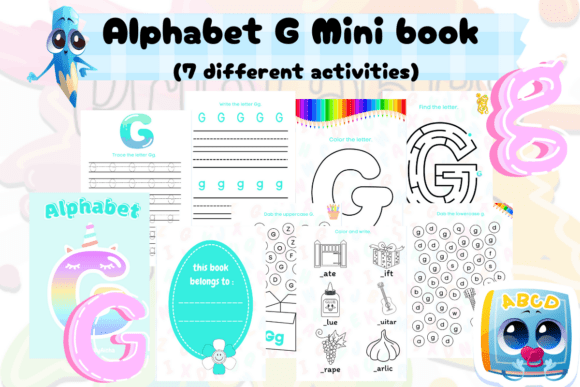
The visual appeal of the Alphabet E Mini Book lies in its simplicity and clarity. In the realm of typography and design, we often discuss the importance of "white space" and "legibility." This mini book applies those principles by using large, open letterforms for the letter E. This is crucial for the target demographic: preschool and kindergarten students who are just developing their fine motor skills. The visual style is clean, avoiding the clutter that can distract young learners. It functions much like a well-designed sans serif typeface in a user interface—unobtrusive, highly readable, and focused on function.
From a design perspective, the included activities—such as the dot marker exercises and letter mazes—rely on high-contrast visuals. This ensures that children can easily distinguish between the background and the activity area. The "Color and Write" sections are particularly effective, blending artistic expression with cognitive reinforcement. For the creator or publisher, this means the asset is ready to be integrated into a larger workbook or sold as a standalone digital download without the need for extensive graphic editing. It is a premium font-style resource in terms of utility: professional, consistent, and purpose-built.
Strategic Applications in Creative Projects
Understanding where and how to deploy the Alphabet E Mini Book is key to maximizing its value. It fits seamlessly into several distinct market segments. In brand identity for educational businesses, these printables can serve as a lead magnet. Offering a high-quality, free sample of your educational content builds trust and demonstrates your brand's commitment to quality—a core tenet of E-E-A-T (Experience, Expertise, Authoritativeness, and Trustworthiness).
For content creators and bloggers in the parenting niche, this resource is ideal for social media graphics and web design integration. You can photograph the completed pages to create "pins" for Pinterest or use the digital files in a carousel post on Instagram. The versatility of the mini book allows it to be used in packaging design for educational kits or as a supplementary insert in editorial design for family-oriented magazines. Even in commercial settings, such as daycare centers or after-school programs, the no-prep nature of the file makes it an invaluable operational asset.
Readability, Hierarchy, and Audience Engagement
In any design project, whether it involves a script font for a wedding invitation or a serif font for a book layout, the goal is to guide the viewer's eye. The Alphabet E Mini Book achieves this through a specific visual hierarchy. The instructions are typically concise, allowing the child's focus to remain on the main task. This mirrors the best practices of modern typography, where hierarchy ensures that the most important information is processed first.
For the adult user—be it a teacher or a parent—the engagement comes from the ease of use. The ability to print and go eliminates friction. When evaluating this asset, consider how it influences the "brand perception" of your own offerings. Providing a well-structured, visually appealing worksheet signals professionalism to your clients or audience. It demonstrates that you value their time and are providing design assets that are functional and aesthetically pleasing.
Practical Guidance for Implementation
Integrating the Alphabet E Mini Book into your workflow requires a strategic approach, similar to how one would approach font pairing in a design project. Here is how to evaluate the fit:
- Evaluate Project Fit: Is your audience looking for hands-on activities? This mini book is perfect for kinesthetic learners. If your project requires a more digital-first approach, you might use the concepts as a basis for interactive web elements.
- Review Included Styles: Look at the seven worksheets as a cohesive set. Just as a premium font might come with bold, italic, and light weights, this mini book offers variety through different activity types (tracing, coloring, mazes). Use this variety to maintain engagement over a week-long lesson plan.
- Readability Considerations: Ensure that when you print the pages, the scaling is correct. The letterforms need to be large enough for small hands to trace comfortably. This is the equivalent of checking the "x-height" in creative font selection.
- Commercial Licensing: If you are a small business owner or entrepreneur planning to sell the printed worksheets or include them in a paid curriculum, verify the licensing terms. Just as with a commercial font, usage rights dictate how you can distribute the final product.
Ultimately, the Alphabet E Mini Book is more than just a collection of pages. It is a strategic tool for logo design concepts in the education sector, a functional asset for packaging design in learning kits, and a staple for any brand identity focused on early childhood development. By treating these worksheets with the same rigor you would apply to selecting a display font for a headline, you ensure that your educational materials are both effective and professionally polished.