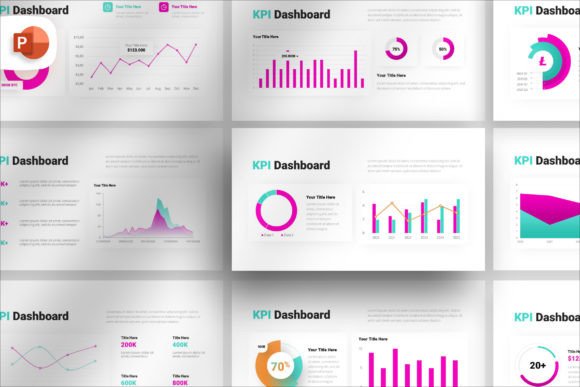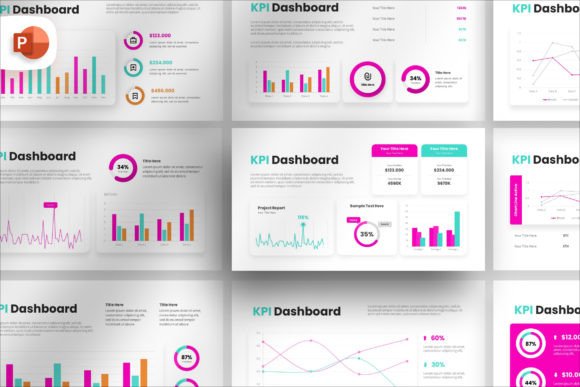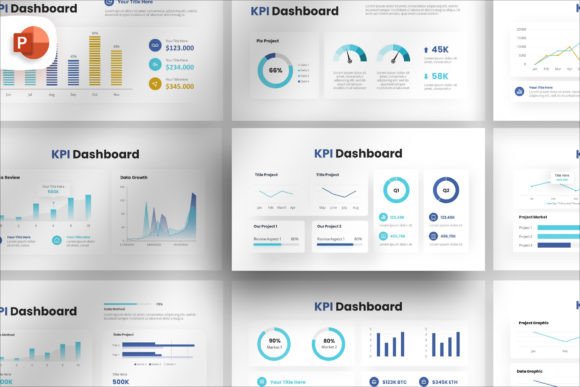
Master Your Metrics with the KPI Dashboard Chart Template
Presenting data is one thing; making it stick is another. We have all sat through presentations where the numbers blur together into a meaningless sea of spreadsheets. The goal is never just to show the data, but to tell the story behind it. When you are dealing with Key Performance Indicators (KPIs), clarity is paramount. You need a tool that bridges the gap between raw statistics and strategic insight. That is exactly where the KPI Dashboard Chart - PowerPoint Template steps in. It is not just a collection of slides; it is a visual framework designed to transform complex processes and strategies into compelling narratives.
Visual Characteristics and Design Personality
At its core, this template embodies modern typography and clean aesthetics. It avoids the clutter that plagues so many corporate slide decks. The visual personality of the KPI Dashboard Chart - PowerPoint Template is confident, organized, and inherently professional. It uses a structured grid system that allows your eyes to naturally gravitate toward the most critical information. The graphics are designed to be visually stunning without being distracting, striking that delicate balance between form and function.
The style relies heavily on geometric shapes and intuitive iconography. This approach supports the "drag and drop" functionality mentioned in its features, allowing users to create flowcharts and data visualizations that look hand-crafted by a professional designer. Whether you are using a serif font for a traditional financial report or a sans serif font for a tech startup pitch, the layout adapts. The 16:9 aspect ratio ensures that your content fills modern screens perfectly, providing an immersive viewing experience that commands attention in boardrooms or virtual meetings alike.
Strategic Applications: Beyond the Boardroom
While the name suggests a specific use case, the versatility of this asset extends far beyond quarterly business reviews. For the brand strategist, these slides offer a pristine canvas for mapping out brand identity guidelines. You can visualize the customer journey or map out content pillars with a clarity that standard bullet points simply cannot achieve.
Marketers and entrepreneurs will find this tool indispensable for campaign post-mortems. Instead of burying lead generation numbers in a text-heavy document, you can present a dashboard that highlights conversion rates and ROI instantly. This visual hierarchy ensures that stakeholders grasp the "wins" immediately. Furthermore, educators and publishers can repurpose the flowchart capabilities to explain complex topics. Imagine breaking down a dense historical timeline or a scientific process using the template’s auto-adjustment features. The ability to seamlessly communicate complex ideas makes it a staple for anyone who needs to teach, pitch, or persuade.
The Power of Visual Hierarchy and Readability
One of the most underrated aspects of design is how it influences readability. A cluttered slide forces the audience to work hard to decode the message, leading to cognitive fatigue. The KPI Dashboard Chart - PowerPoint Template mitigates this by enforcing strong visual hierarchy. By utilizing designated placeholders for data and text, it prevents the common mistake of "wall-of-text" slides.
This structure directly impacts audience engagement. When information is chunked into digestible visual blocks, retention rates skyrocket. The template acts as a guide, helping you decide what information is essential and what is noise. This discipline is crucial for web design presentations or packaging design pitches where the visual "look and feel" is just as important as the data. By presenting your metrics within a high-quality framework, you subconsciously signal professionalism and competence to your audience.
Practical Guidance for Implementation
Getting the most out of this design asset requires a bit of strategy. Here is how to integrate it effectively into your workflow:
- Evaluating Project Fit: Before diving in, assess the density of your data. If you have heavy numerical data, focus on the chart-specific slides. If you are mapping a strategy, utilize the flowchart layouts. The template is versatile, but choosing the right slide for the right data is key to maintaining impact.
- Font Pairing and Customization: The package includes documentation and free-license fonts, which is a great starting point. However, for logo design or specific brand identity work, you may want to swap these out. The template is "fully editable," meaning you can change shape colors and sizes. If you are pairing a script font with a display font, ensure the hierarchy remains clear. The dashboard layout usually favors clean, legible typefaces over overly ornate handwritten fonts.
- Using Mockups Effectively: The inclusion of device mockups is a standout feature. If you are a digital creator or app developer, use the drag-and-drop screen placeholders to show your UI in context. This adds a layer of realism to your pitch that static screenshots cannot match. It bridges the gap between the slide and the real-world application of your product.
- Color and Consistency: To maintain brand identity, take five minutes to adjust the shape colors to match your brand palette before you start building your deck. This ensures consistency across all 21 unique slides, creating a cohesive visual story from start to finish.
Conclusion
In the world of creative fonts and design assets, utility often trumps novelty. The KPI Dashboard Chart - PowerPoint Template is a prime example of a tool that delivers high utility without sacrificing aesthetic appeal. It empowers small business owners, content creators, and corporate managers to present their data with the polish of a premium agency. By focusing on clarity, adaptability, and professional design, this template does more than just display numbers—it helps you build trust, drive engagement, and ultimately, make better decisions based on the insights you present.